Key Takeaways
- The primary difference between SOC 2 and ISO 27001 is that SOC 2 is an attestation report, while ISO 27001 is a global certification standard
- SOC 2 is mostly required by North American consumers, while ISO 27001 is highly-regarded by international and European clients
- Choosing a compliance framework should be based on customer demands, compliance timelines, and business priorities
Today, the majority of B2B companies must comply with current security standards. Truth be told, 48% of software consumers consider security the second most important thing to look into when purchasing digital products, as emphasized in Gartner’s Digital Markets 2024 Global Software Buying Trends Report. The same study also underscores the fact that 46% of buyers chose their preferred vendor because of security certifications and practices.
On the flip side, IBM’s Cost of a Data Breach Report from 2024 found that the cost of the average data breach has hit an astounding $4.88 million, highlighting the need for robust security infrastructures that are capable of protecting sensitive company information and customer data.
When you think about it, the question isn’t whether you need to seek security compliance. Rather, which kind of compliance framework should you pursue first?
At the forefront of security compliance are two standards: SOC 2 and ISO 27001. While often regarded with equal or similar respect, they serve two distinct purposes and appeal to different markets. But in essence, both of them are designed to safeguard critical information.
Defining SOC 2 and ISO 27001
SOC 2, or System and Organization Controls 2, is a voluntary security and privacy compliance standard created by the American Institute of Certified Public Accountants (AICPA) in 2010. It is aimed at service providers that collect, process, and store customer data. This makes it ideal for businesses that specialize in technology, SaaS, and cloud services.
To better understand how SOC 2 works, it is important to mention how this specific framework evaluates an organization. This is where the five Trust Services Criteria come into play. SOC 2 reports are based on key security information that has been assessed against five factors, which are:
- Security - mandatory; protects against data attacks and unauthorized access
- Availability - checks system accessibility and usability
- Processing Integrity - confirms the accuracy and credibility of data processing systems
- Confidentiality - protects sensitive information
- Privacy - verifies that collected data is handled appropriately
To clarify, SOC 2 compliance results in an attestation report, not a certification. It contains the independent opinion provided by a licensed CPA firm that has been derived from their examination of your security infrastructure.
There are two kinds of SOC 2 reports. Type 1 is designed to examine security controls at a specific date. Meanwhile, Type 2 focuses on the efficacy of a security system over a longer period of time, which is usually three to twelve months.
On the other hand, ISO 27001 is an international standard that takes an intensive approach. It was developed by the International Organization for Standardization (ISO) in partnership with the International Electrotechnical Commission (IEC).
While SOC 2 focuses on security controls, ISO 27001’s framework calls for:
- The implementation of all 93 controls described in Annex A of the standard
- The maintenance of the controls
- The continuous improvement of an organization’s Information Security Management System (ISMS)
These controls include cryptography, asset management, access control, organizational policies, human resource security, physical security, and many others.
ISO 27001 involves a three-year certification cycle. Once your organization passes the initial two-stage audit, it will go through annual surveillance in the first two years, concluding in a full recertification audit in the third year.
The significance of this standard cannot be overstated. In 2025, the global market for ISO 27001 certification was valued at $18.59 billion. It is expected to hit $74.56 billion by 2035, as reported by Business Research Insights. Such growth is powered by increasing cyber attacks, regulatory demands, and business globalization.
SOC 2 vs. ISO 27001: Key Differences
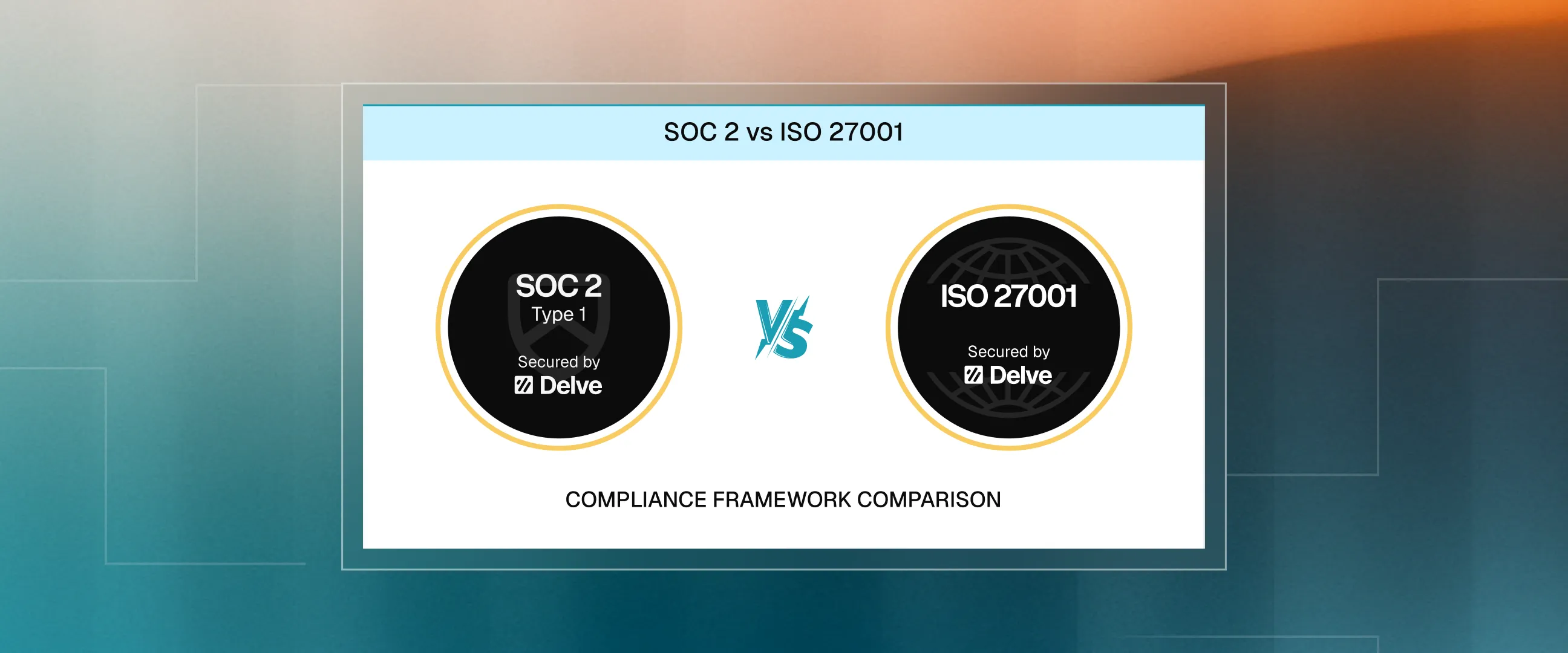
Despite the framework overlap when it comes to controls, SOC 2 and ISO 27001 each have a unique approach, scope, and market recognition. Let’s break them down:
Understanding the differences between these two security standards is vital. While SOC 2 provides a professional assessment of your controls from a licensed auditor, ISO 27001 certifies that your organization meets recognized standards.
ISO 27001 adoption is projected to increase by over 20% annually. This number emphasizes why many businesses eventually aim for both SOC 2 compliance and ISO 27001 certification. This is because they hope to easily meet diverse consumer requirements.
Which Framework Should You Choose?
Perhaps now you’re wondering, “Should I choose SOC 2 or ISO 27001?” Well, that depends on a number of factors: your client base, current and emerging markets, and your business priorities. Even though they both serve as proof of organizational integrity, they can mean entirely different things to different audiences. This decision should not be considered anything less than critical, especially since it could mean wasted resources or missed opportunities.
Choose SOC 2 if:
- Your target market is in North America, since SOC 2 is the de facto standard for North American companies
- You need to achieve quick compliance to prevent enterprise deals from lagging
- You want better flexibility in choosing which areas or criteria to cover, depending on your service offerings
- Your organization is handling data in cloud environments
- Your sales cycle requires immediate proof of your security posture
- You want to build compliance incrementally rather than implementing it all at once. SOC 2 readiness can give your organization a leg up in easy compliance over time.
Choose ISO 27001 if:
- You have an international customer base, especially in Europe or Asia-Pacific, where ISO 27001 holds more weight
- You need an extensive ISMS that will give you a panoramic view of your security infrastructure and an organized framework for continuous improvement
- You need to comply with other security standards simultaneously
- You want a formal certification instead of an attestation report, given that some consumers consider certification more compelling
- Your existing security system aligns with ISO 27001’s requirements
- You aim to work with government agencies or regulated industries that regard international standards more highly
Pursue both SOC 2 and ISO 27001 if:
- You have clients both in the US and in other countries. Having both frameworks in place avoids any impediments to deals, regardless of their origin
- Your customers explicitly request compliance with both standards
- You want to secure long-term business growth. Dual compliance can bridge gaps in security controls and documentation that require great effort to look into.
Be sure to review your business deals to pinpoint which parts are stalling and identify which measures can help eliminate friction. Remember, compliance should drive revenue and build trust, not just check a box.
Get Compliant with Delve
No matter which security framework you choose, be it SOC 2 or ISO 27001, the challenge for your organization is strategically allocating time and resources to achieve compliance. It’s no secret that traditional compliance processes can be tedious and costly. Hours and hours spent on manual data gathering, policy writing, and auditor communications.
But with the right, AI-powered tools in hand, you can be compliant effortlessly.
Delve’s AI-native compliance services are designed to help businesses build compliance through intelligent automation. The platform offers:
- AI-driven evidence collection that directly gathers proof from integrated systems
- AI Copilot or guidance for addressing compliance gaps
- Audit support that prevents constant back-and-forth communication
- All-inclusive pricing without hidden fees
- Round-the-clock Slack support for whenever you need immediate assistance
With a trusted compliance process, Delve promises proper management of even the most complex cases. The combination of AI evidence authentication and dedicated auditing teams will enable you to achieve compliance efficiently alongside your day-to-day operations.
About the authors

Key Takeaways
- The primary difference between SOC 2 and ISO 27001 is that SOC 2 is an attestation report, while ISO 27001 is a global certification standard
- SOC 2 is mostly required by North American consumers, while ISO 27001 is highly-regarded by international and European clients
- Choosing a compliance framework should be based on customer demands, compliance timelines, and business priorities
Today, the majority of B2B companies must comply with current security standards. Truth be told, 48% of software consumers consider security the second most important thing to look into when purchasing digital products, as emphasized in Gartner’s Digital Markets 2024 Global Software Buying Trends Report. The same study also underscores the fact that 46% of buyers chose their preferred vendor because of security certifications and practices.
On the flip side, IBM’s Cost of a Data Breach Report from 2024 found that the cost of the average data breach has hit an astounding $4.88 million, highlighting the need for robust security infrastructures that are capable of protecting sensitive company information and customer data.
When you think about it, the question isn’t whether you need to seek security compliance. Rather, which kind of compliance framework should you pursue first?
At the forefront of security compliance are two standards: SOC 2 and ISO 27001. While often regarded with equal or similar respect, they serve two distinct purposes and appeal to different markets. But in essence, both of them are designed to safeguard critical information.
Defining SOC 2 and ISO 27001
SOC 2, or System and Organization Controls 2, is a voluntary security and privacy compliance standard created by the American Institute of Certified Public Accountants (AICPA) in 2010. It is aimed at service providers that collect, process, and store customer data. This makes it ideal for businesses that specialize in technology, SaaS, and cloud services.
To better understand how SOC 2 works, it is important to mention how this specific framework evaluates an organization. This is where the five Trust Services Criteria come into play. SOC 2 reports are based on key security information that has been assessed against five factors, which are:
- Security - mandatory; protects against data attacks and unauthorized access
- Availability - checks system accessibility and usability
- Processing Integrity - confirms the accuracy and credibility of data processing systems
- Confidentiality - protects sensitive information
- Privacy - verifies that collected data is handled appropriately
To clarify, SOC 2 compliance results in an attestation report, not a certification. It contains the independent opinion provided by a licensed CPA firm that has been derived from their examination of your security infrastructure.
There are two kinds of SOC 2 reports. Type 1 is designed to examine security controls at a specific date. Meanwhile, Type 2 focuses on the efficacy of a security system over a longer period of time, which is usually three to twelve months.
On the other hand, ISO 27001 is an international standard that takes an intensive approach. It was developed by the International Organization for Standardization (ISO) in partnership with the International Electrotechnical Commission (IEC).
While SOC 2 focuses on security controls, ISO 27001’s framework calls for:
- The implementation of all 93 controls described in Annex A of the standard
- The maintenance of the controls
- The continuous improvement of an organization’s Information Security Management System (ISMS)
These controls include cryptography, asset management, access control, organizational policies, human resource security, physical security, and many others.
ISO 27001 involves a three-year certification cycle. Once your organization passes the initial two-stage audit, it will go through annual surveillance in the first two years, concluding in a full recertification audit in the third year.
The significance of this standard cannot be overstated. In 2025, the global market for ISO 27001 certification was valued at $18.59 billion. It is expected to hit $74.56 billion by 2035, as reported by Business Research Insights. Such growth is powered by increasing cyber attacks, regulatory demands, and business globalization.
SOC 2 vs. ISO 27001: Key Differences
Despite the framework overlap when it comes to controls, SOC 2 and ISO 27001 each have a unique approach, scope, and market recognition. Let’s break them down:
Understanding the differences between these two security standards is vital. While SOC 2 provides a professional assessment of your controls from a licensed auditor, ISO 27001 certifies that your organization meets recognized standards.
ISO 27001 adoption is projected to increase by over 20% annually. This number emphasizes why many businesses eventually aim for both SOC 2 compliance and ISO 27001 certification. This is because they hope to easily meet diverse consumer requirements.
Which Framework Should You Choose?
Perhaps now you’re wondering, “Should I choose SOC 2 or ISO 27001?” Well, that depends on a number of factors: your client base, current and emerging markets, and your business priorities. Even though they both serve as proof of organizational integrity, they can mean entirely different things to different audiences. This decision should not be considered anything less than critical, especially since it could mean wasted resources or missed opportunities.
Choose SOC 2 if:
- Your target market is in North America, since SOC 2 is the de facto standard for North American companies
- You need to achieve quick compliance to prevent enterprise deals from lagging
- You want better flexibility in choosing which areas or criteria to cover, depending on your service offerings
- Your organization is handling data in cloud environments
- Your sales cycle requires immediate proof of your security posture
- You want to build compliance incrementally rather than implementing it all at once. SOC 2 readiness can give your organization a leg up in easy compliance over time.
Choose ISO 27001 if:
- You have an international customer base, especially in Europe or Asia-Pacific, where ISO 27001 holds more weight
- You need an extensive ISMS that will give you a panoramic view of your security infrastructure and an organized framework for continuous improvement
- You need to comply with other security standards simultaneously
- You want a formal certification instead of an attestation report, given that some consumers consider certification more compelling
- Your existing security system aligns with ISO 27001’s requirements
- You aim to work with government agencies or regulated industries that regard international standards more highly
Pursue both SOC 2 and ISO 27001 if:
- You have clients both in the US and in other countries. Having both frameworks in place avoids any impediments to deals, regardless of their origin
- Your customers explicitly request compliance with both standards
- You want to secure long-term business growth. Dual compliance can bridge gaps in security controls and documentation that require great effort to look into.
Be sure to review your business deals to pinpoint which parts are stalling and identify which measures can help eliminate friction. Remember, compliance should drive revenue and build trust, not just check a box.
Get Compliant with Delve
No matter which security framework you choose, be it SOC 2 or ISO 27001, the challenge for your organization is strategically allocating time and resources to achieve compliance. It’s no secret that traditional compliance processes can be tedious and costly. Hours and hours spent on manual data gathering, policy writing, and auditor communications.
But with the right, AI-powered tools in hand, you can be compliant effortlessly.
Delve’s AI-native compliance services are designed to help businesses build compliance through intelligent automation. The platform offers:
- AI-driven evidence collection that directly gathers proof from integrated systems
- AI Copilot or guidance for addressing compliance gaps
- Audit support that prevents constant back-and-forth communication
- All-inclusive pricing without hidden fees
- Round-the-clock Slack support for whenever you need immediate assistance
With a trusted compliance process, Delve promises proper management of even the most complex cases. The combination of AI evidence authentication and dedicated auditing teams will enable you to achieve compliance efficiently alongside your day-to-day operations.
21-year-old MIT dropouts raise $32M at $300M valuation led by Insight
Related Posts




Don't let manual compliance slow you down.


.avif)






.webp)